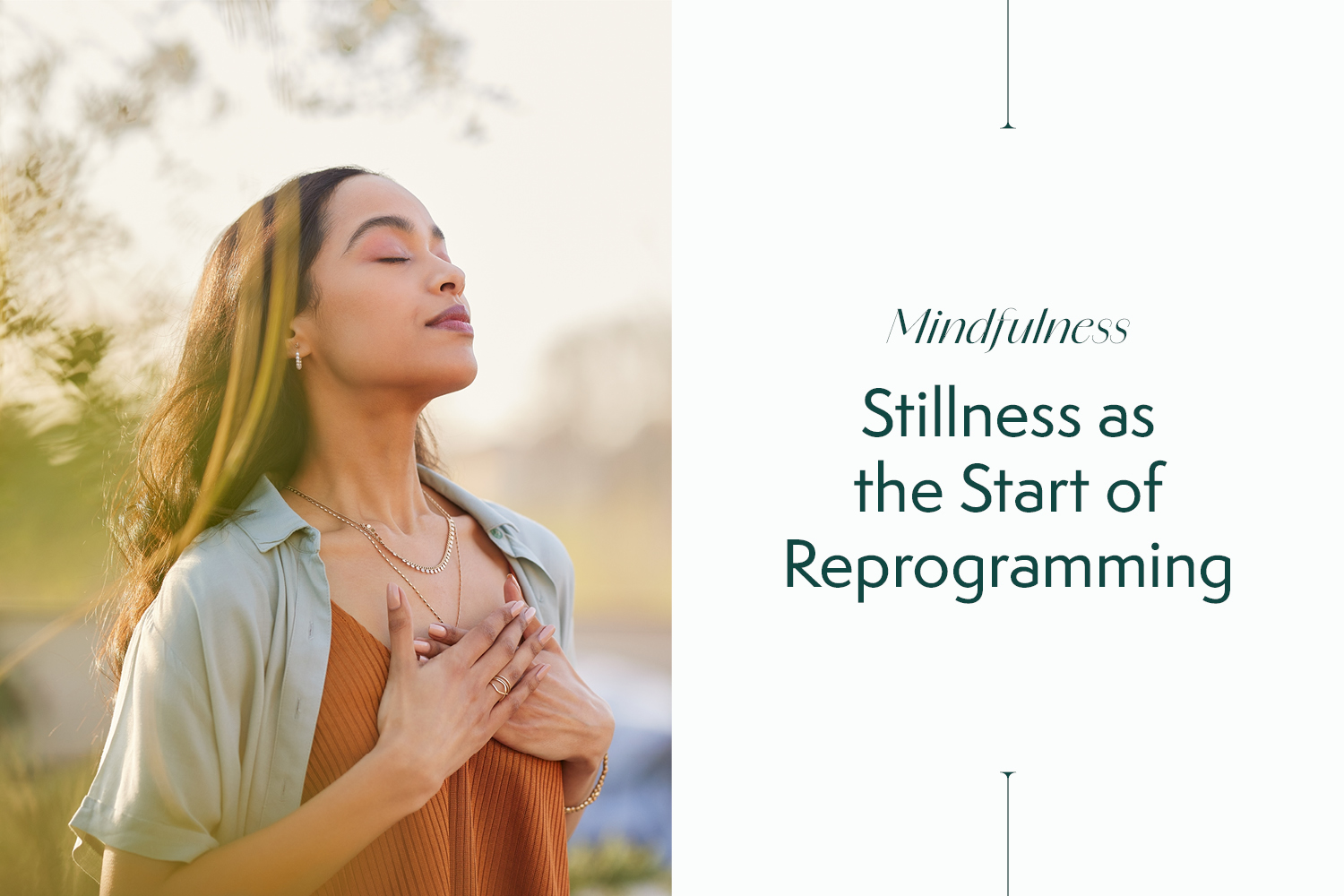
Our world celebrates constant motion. We are taught that progress comes from doing more, moving faster, and pushing harder. But when it comes to changing the deep patterns in your body, the opposite is often true.
True transformation doesn’t happen in the rush. It begins when you finally become still.
Imagine trying to tune an instrument while someone is still playing it. It’s impossible.
Your nervous system is the same; it cannot learn a new pattern while it’s busy executing the old ones.
Constant motion keeps your body running on its existing, automated programs. Stillness creates the necessary pause for a new signal to be received, recognised, and integrated.
We often think of rest as simply recharging our energy to go back to our old habits. But intentional stillness is different. It is an active process of recalibration.
In these quiet moments, your nervous system processes the inputs it has received. It takes the new sensory information, like the feeling of ease after a chiropractic adjustment, and begins to set a new baseline.
This is where your body’s definition of “normal” begins to shift.
When you stand up straighter or release a clenched muscle, you introduce a new physical reality. But your brain, which holds the old map of your body, needs a moment to catch up. Stillness provides that crucial moment.
It allows your brain to update its internal map and register the new posture as safe and available. Without this pause, the brain will quickly revert to the old, familiar blueprint it knows so well.
The process of breaking a habit is the process of rewiring your brain. This deep neurological work requires a quiet environment, both externally and internally.
When the noise of daily life and the chatter of your mind subside, your brain can get to work. It can weaken the old neural pathways of tension and bracing, and strengthen the new ones of ease and calm.
Stillness is the fertile ground for neuroplasticity.
Sitting quietly for just two minutes with your shoulders relaxed and your breath deep teaches your body more than two hours of thinking about relaxing. A calm posture held in stillness is a powerful, direct signal of safety.
It is a physical experience, not an intellectual idea. This felt sense of safety is the language your nervous system understands, and it is the key to letting go of old, protective patterns.
There can be a subtle pressure to always be doing something to heal. But the moments of quiet integration are just as productive as the moments of action. You do not need to perform your progress for it to be real.
The silent, unseen work your body does in stillness is profound. It is where the changes truly take root and become a lasting part of who you are.